

Asking for More Money Is Normal
Your plumber, butcher, dentist, and baker have no problem raising their prices. But as a freelancer you've decided to stay put?


We’ve all been there, whether as an employee or as a freelancer. It’s uncomfortable, I know. Admit it, it’s damn right scary.
What will they say?
Will I look greedy?
Will I get fired?
Will I ever make more money than this?
Basic survival
Take a good look at this chart.
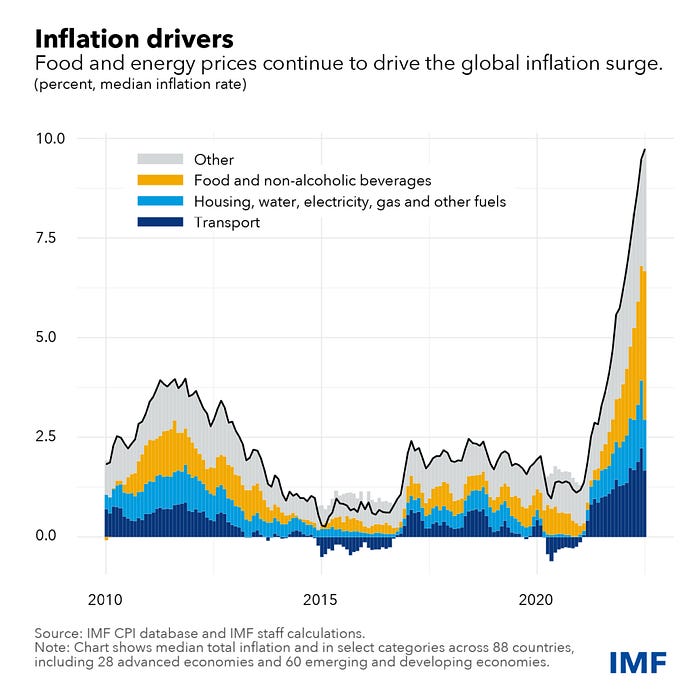
The prices of your bread, milk, eggs, and bananas are only going higher. Are your invoices and wage slips reflecting this upward curve?
If not, you’re playing a losing game, my friend.
Even if you’re not making any noticeable progress in your career, you should still be demanding a wage increase to keep up with inflation. Your meals depend on this.
But what if you’re performing well, doing superior work, and bringing in results. You might feel a bit embarrassed, shy, scared even, to ask for more money.
What about your:
Accountant
Electrician
Bus Driver
Mechanic
Plumber
Butcher
Dentist
Baker
Do any of them blink an eye before asking for higher prices?
Whether you’re a graphic designer, copywriter, window fitter, or shoe repairman, you provide a service that’s part of someone’s expenses.
If you don’t raise your prices, what does that say of you?
Put yourself inside your customer’s skull: Every single expense is going up, but this sucker here is lying flat. Are they fools? Maybe I should hire someone who’s a bit more clued in.
Understand your customer’s emotional attachment
There are 8 billion people on this planet. If you’re depending on just 1 of them to pay your meals, I think you need to open up your eyes a little wider.
Look at the rush hour traffic in your town: swarms of people moving around, cars honking and beeping, buses and metros packed liked tins of sardines. Emails flying, phone notifications buzzing. The world is alive and thriving.
But you’re keeping your prices low because you’re afraid to lose that 1 customer?
Like many new freelancers, I grinded my way up. The higher I charged, the more I understood what you read online: The better-paying customers are much more relaxed.
And it makes perfect sense.
Meet customer A
They’re in the market for a copywriter to help launch their new site. They’ve put a significant amount of their own money into this project; it’s emotional for them. It’s everything to them. They see all things through the lens of their investment.
Your growth (survival) doesn’t fit into that picture.
Now meet customer B
They run a successful business (sometimes multiple). They can choose anyone to do the work for them. They just want to trust someone to soothe their pain points and move on. They’re emotionally detached from the process.
Customer B knows how to make money. They’re aware of market moves, inflation, and other macro factors. They have dozens of suppliers raising prices and are quietly expecting you to raise yours too, especially if you’ve done a good job. Not to mention onboarding new hires is a hassle.
More often than not, the person paying for your services has more money than you. Your “big bucks” is their small change.
There are countless other customers out there for you at various price points, especially if you work online.
Don’t be afraid to ditch the difficult ones and level up when you’re ready. Just don’t go about it in a greedy way.
Earn their respect, and ask for that raise.
Rising too fast is a mental risk
The invisible barriers formed by our human psychology are real. Putting yourself in new situations with higher responsibilities will always play tricks on your simple mind. So while you should take advantage of opportunities and be optimistic about your progress, there’s a lot to be said about the slow growth approach.
Levelling up slowly keeps your Impostor Syndrome at bay. It guards you within a familiar range of previous experience.
Imagine jumping from $10 blog posts, to suddenly landing a $1,000 article. After the initial joy wears off, the self-doubt will creep in. You’ll soon be asking questions like: Why am I here? Can I achieve this quality? Did I reach too high?
Levelling slowly (but often) teaches you to manage your finances and trains your negotiation abilities; two key non-creative skills many new freelancers lack. These incremental advances keep you grounded in a continuous growth mindset.
That being said, your current customers can and should come along with you for the ride. But at some point you’ll have to bid them adieu and move on. No matter how friendly that $10 blog post customer is, they’ll never pay for your $1,000 article.
The customer carousel keeps turning.
And as you continue, know that new customers are opportunities to raise prices. Just don’t raise your prices 54x overnight. Leave that to the pharma bros.
Here’s your deliverable
Funnily enough, some freelancers do choose to keep some of their earliest customers simply because they enjoy the collaboration. That’s the beauty of being successful at what you do; you put yourself in a position to do what feels right and not make choices based on money alone.
You see, this whole freelance thing’s a game. It’s about levelling up and beating the boss. The cheat code is to see customers as sidekicks and not as bosses.
The real boss is your own dumb brain with its limiting beliefs and Impostor Syndrome.
You can learn more about Impostor Syndrome, a common challenge that affects up to 70% of people, in this recent article.

Signing out for now,
Jason